

ENTERPRISE ARCHITECTURE · REFERENCE DOCUMENT
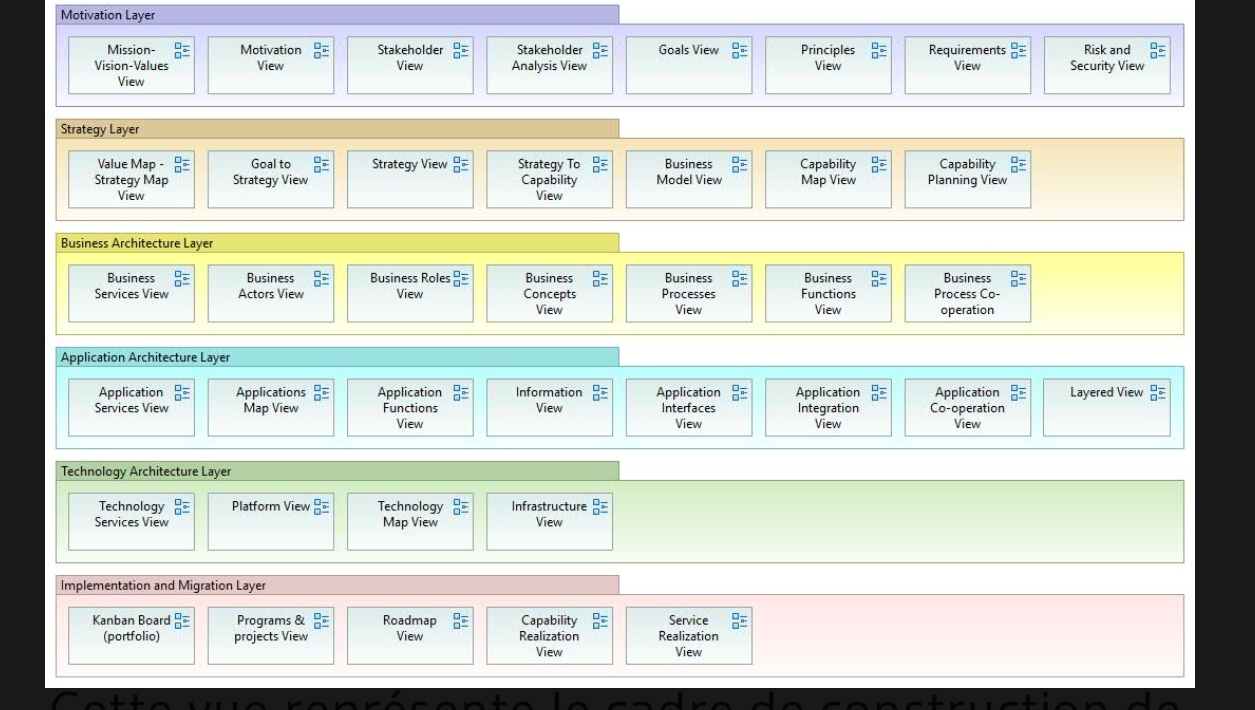
1. Essential benchmarks
ADM phase | Domain | Guiding question |
A – Architecture Vision | Vision and stakeholders | Who is affected and what transformation are we aiming for? |
B – Business Architecture | Organization, actors, roles, functions, capacities | How does the business operate? |
C – Information Systems Architecture | Data and applications | What data and applications support the business? |
D – Technology Architecture | Technologies and platforms | What technologies are the applications based on? |
Matrices are representational artifacts. Their use depends on the scope, the concerns of the stakeholders and the level of detail sought. They are not all mandatory in each ADM cycle.
2. Phase A – Architecture Vision
Stakeholder Map / stakeholder analysis matrix
Phase A – Architecture Vision
Objective: Identify the actors, their influence, their interest and the communication strategy to adopt.
Stakeholder | Influence | Interest | Approach |
CIO | Forte | Strong | Involve closely |
Business Director | Forte | Strong | Involve closely |
CISO | Forte | Strong | Consult and validate |
Developers | Average | Strong | Inform and consult |
Users | Weak | Strong | Collect requirements |
Key question: Who is affected, what are their concerns and how can they be involved?
Please note: The Stakeholder Map is a mapping/analysis of stakeholders, rather than a single standardized matrix.
3. Phase B – Business Architecture
3.1 Business Interaction Matrix
Phase B – Business Architecture
Objective: Show the interactions between organizational units and the nature of their exchanges.
Unit | Commercial | Finance | IT |
Commercial | — | Sales data | CRM development request |
Finance | Sales reporting | — | Need for reporting |
IT | CRM support | Accounting support | — |
Key question: Which organizational units interact and for what exchanges?
3.2 Actor/Role Matrix
Phase B – Business Architecture
Objective: Connect the actors to the roles they play.
Actor | Customer advisor | Credit manager | Agency manager |
Ahmed | X | ||
Sophie | X | X | |
Mark | X |
Key question: Who plays what role?
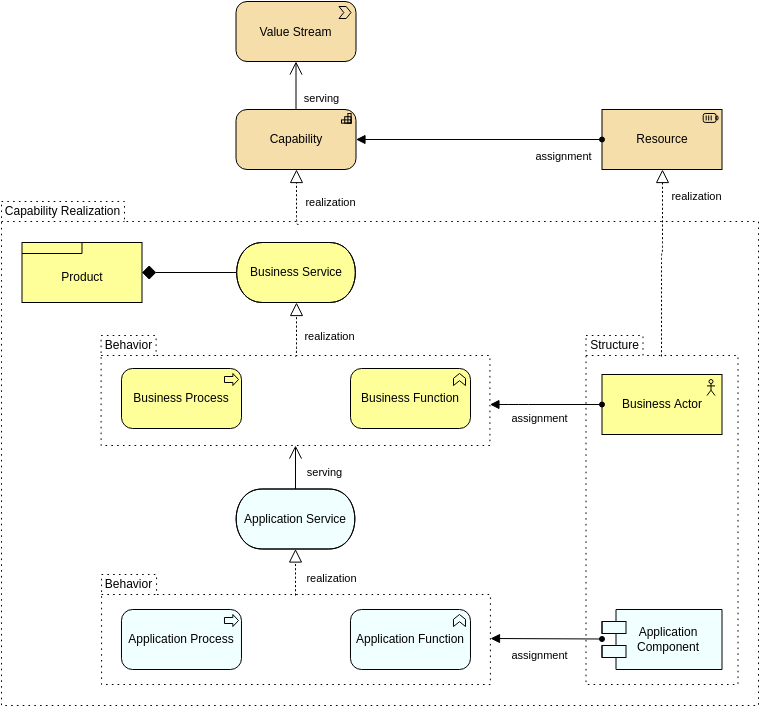
3.3 Value Stream/Capability Matrix
Phase B – Business Architecture
Objective: Link value chains to necessary business capabilities.
Value Stream | Customer management | Credit analysis | Contract management | Billing |
Open an account | X | X | ||
Grant credit | X | X | X | |
Manage a refund | X | X |
Key question: What capabilities contribute to each value chain?
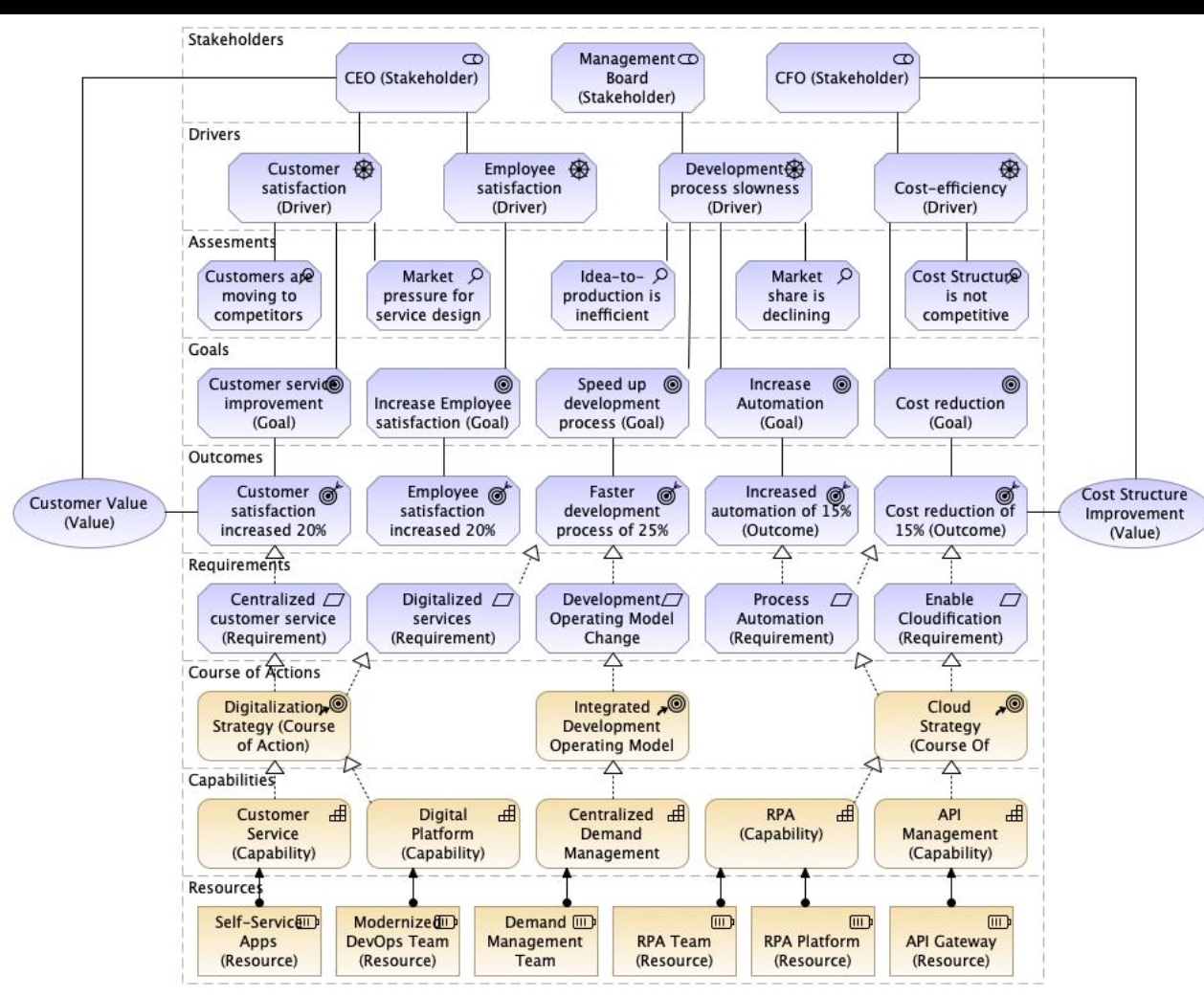
3.4 Strategy/Capability Matrix
Phase B – Business Architecture
Objective: Show which business capabilities contribute to strategic objectives.
Strategic objective | Customer management | Digital payment | Risk analysis |
Improve the customer experience | X | X | |
Reduce financial risks | X | ||
Develop digital | X | X |
Key question: Which capabilities support which strategic objectives?
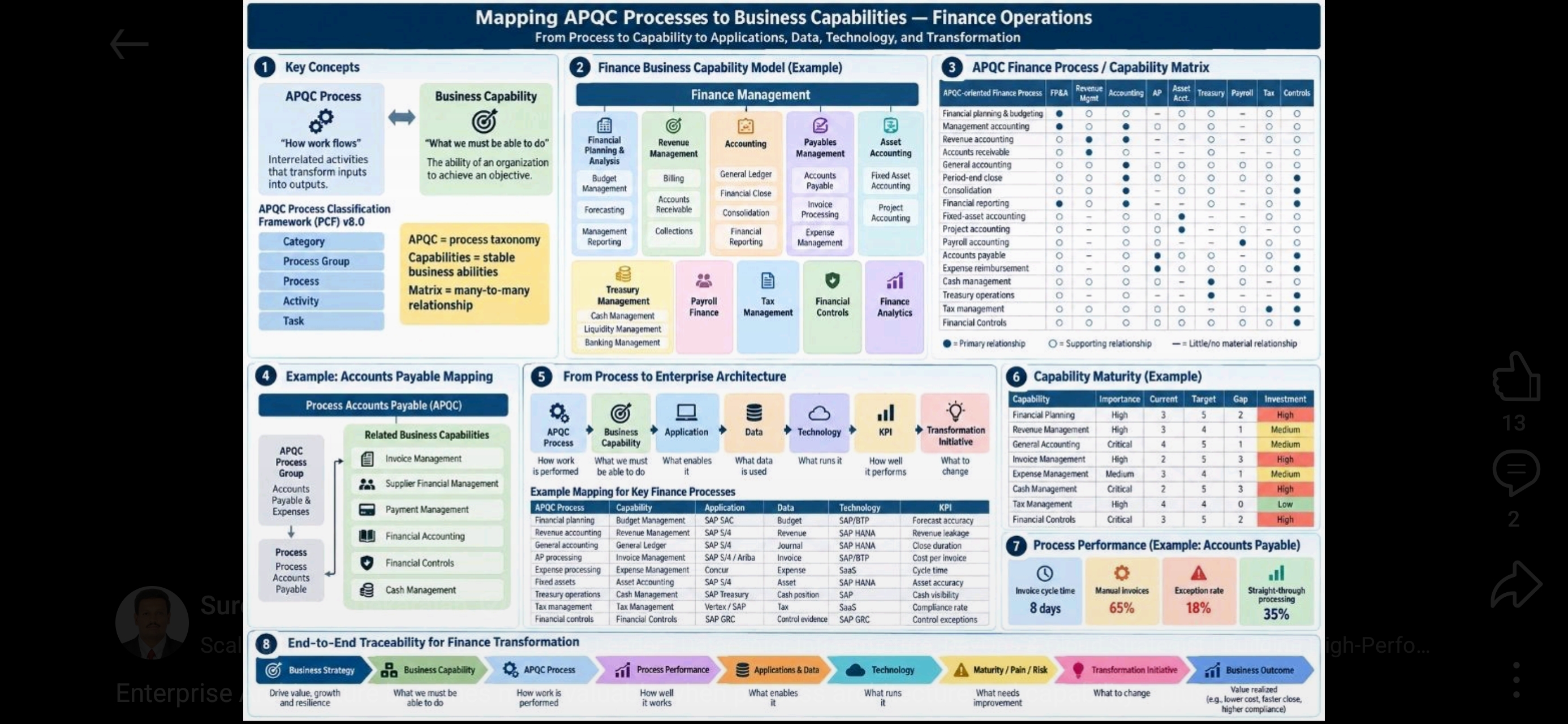
3.5 Capability/Organization Matrix
Phase B – Business Architecture
Objective: Identify the organizational units responsible or contributing to each capability.
Ability | Commercial | Finance | IT |
Customer management | X | ||
Payment management | X | ||
Risk management | X | ||
IT infrastructure | X |
Key question: Which unit is responsible for which capacity?
3.6 Function/Organization Matrix
Phase B – Business Architecture
Objective: Link business functions to the organizational units that carry them out.
Business function | Commercial | Finance | IT |
Customer prospecting | X | ||
Billing | X | ||
IS operation | X |
Key question: Which unit performs which business function?
Please note: To be distinguished from a catalog of actors or a Business Interaction Matrix.
4. Phase C – Information Systems Architecture
4.1 Data Architecture
Data Entity/Business Function Matrix
Phase C – Data Architecture
Objective: Identify the data entities used or produced by business functions.
Data Entity | Customer management | Credit management | Billing |
Customer | X | X | X |
CONTRACT | X | X | |
Bill | X | ||
Credit application | X |
Key question: Which business functions use or produce which data entities?
Application/Data Matrix
Phase C – Data Architecture
Goal: Link applications to the data entities they create, read, modify, or delete.
Application | Customer | CONTRACT | Bill | Payment |
CRM | CRUD | R | ||
Credit app | R | CRUD | ||
ERP | R | R | CRUD | R |
Payment Gateway | R | CRUD |
Key question: Which application accesses which data and with which operations?
Please note: CRUD stands for Create, Read, Update, Delete. Simplified example.
4.2 Application Architecture
Application/Organization Matrix
Phase C – Application Architecture
Objective: Show which organizational units use or manage applications.
Application | Commercial | Finance | IT |
CRM | X | X | |
ERP | X | X | |
Credit app | X | X | X |
Monitoring | X |
Key question: Which unit uses or manages which application?
Role/Application Matrix
Phase C – Application Architecture
Objective: Connect business roles to the applications necessary for their activity.
Role | CRM | ERP | Credit app |
Customer advisor | X | X | |
An accountant | X | ||
Credit manager | X | X | |
IT administrator | X | X | X |
Key question: What applications are used by each role?
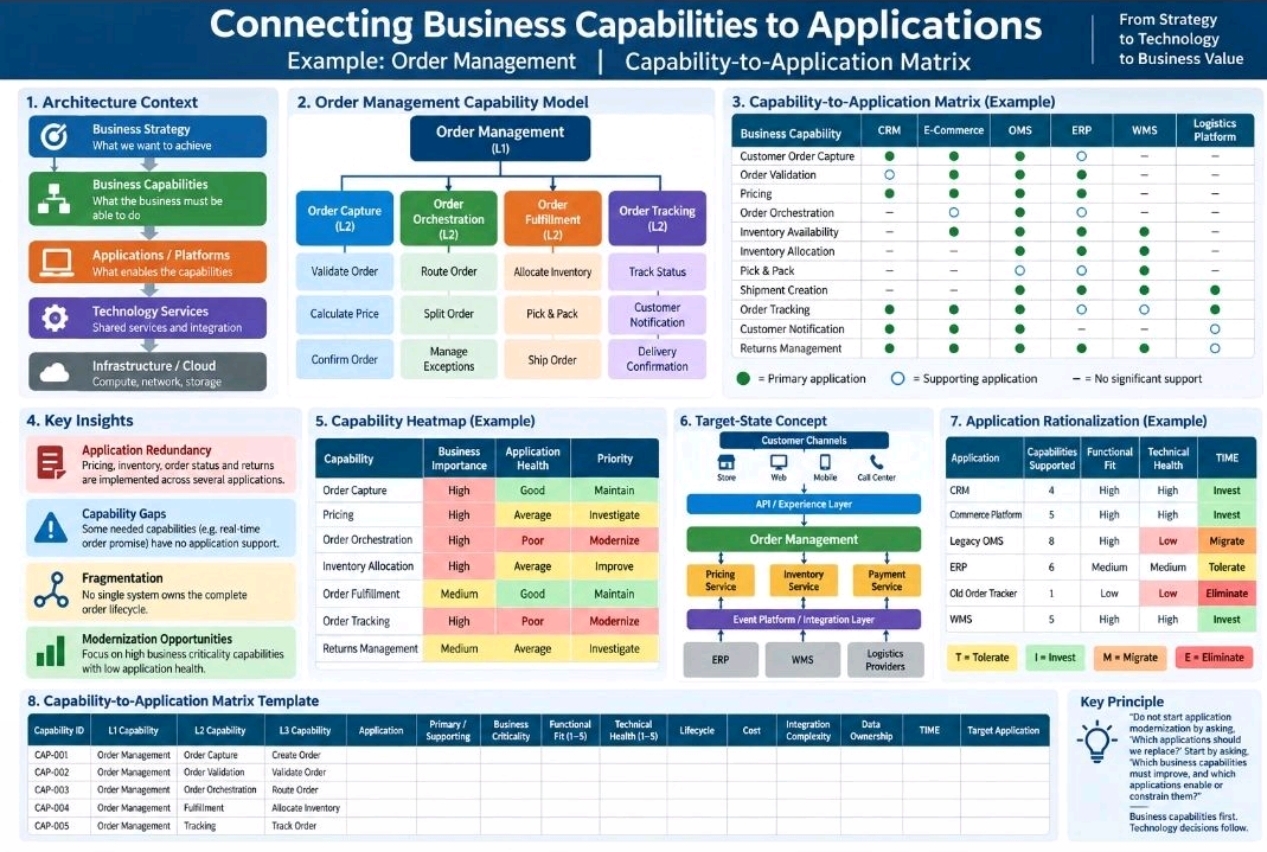
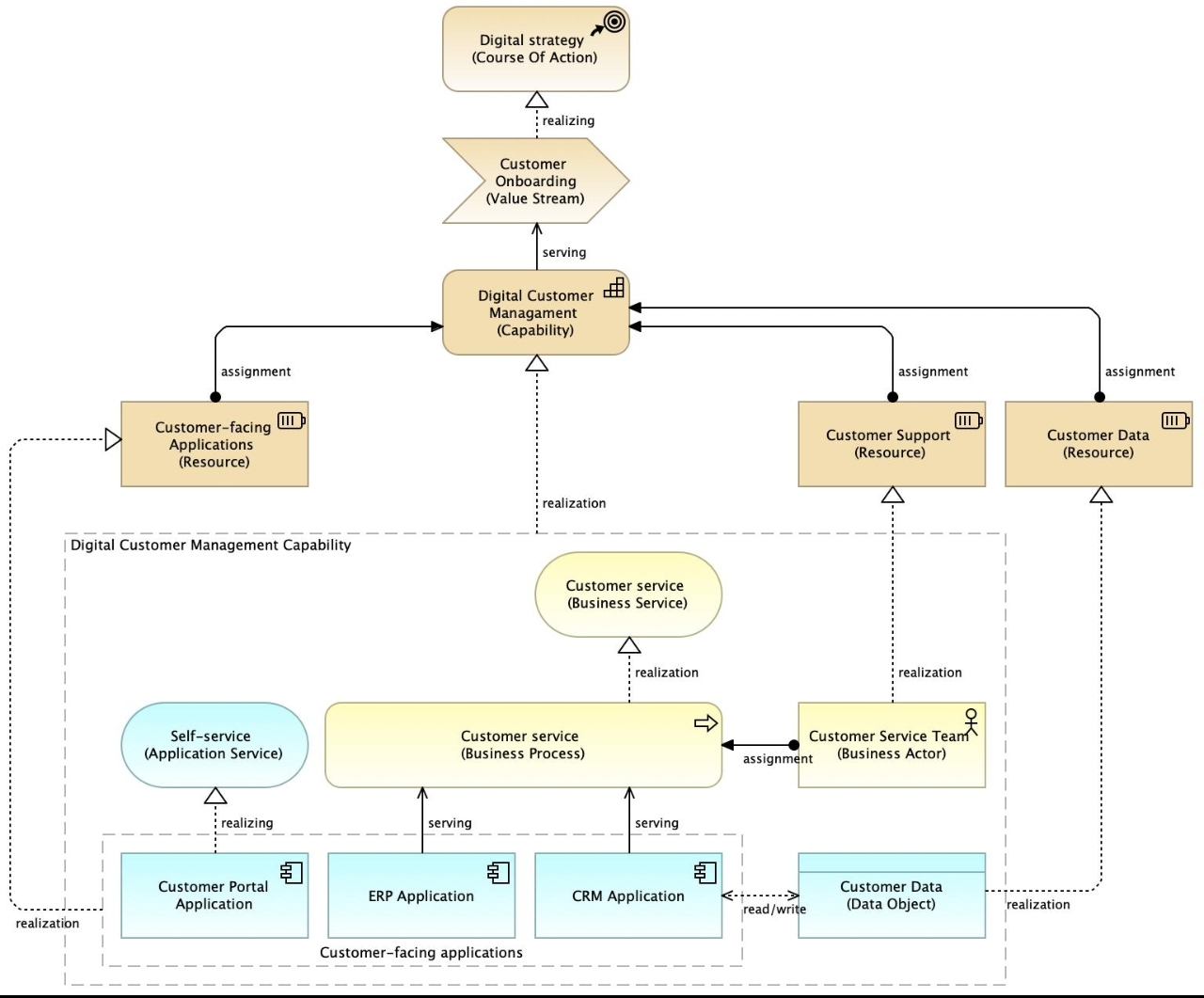
Application/Function Matrix
Phase C – Application Architecture
Objective: Identify applications that support business functions and identify redundancies or uncovered functions.
Application | Customer management | Credit management | Billing | Payment |
CRM | X | |||
Credit app | X | X | ||
ERP | X | X | ||
Payment Gateway | X |
Key question: Which applications support which business functions?
Please note: In the TOGAF catalog, favor Application/Function Matrix rather than Systems/Function Matrix.
Interaction Matrix app
Phase C – Application Architecture
Objective: Describe the exchanges and dependencies between applications.
Source application | Target application | Exchange |
CRM | Credit app | Customer information |
Credit app | ERP | Credit agreement |
ERP | Payment Gateway | Payment request |
Payment Gateway | ERP | Payment confirmation |
CRM | ERP | Billing information |
Key question: What applications communicate and what information do they exchange?
5. Phase D – Technology Architecture
Application/Technology Matrix
Phase D – Technology Architecture
Objective: Associate applications with the technologies and platforms that support them.
Application | Java/Spring Boot | PostgreSQL | Kafka | Kubernetes |
CRM | X | X | X | |
Credit app | X | X | X | X |
ERP | X | X | X | X |
Payment Gateway | X | X | X |
Key question: What technologies and platforms support each application?
Please note: Helps identify technical dependencies, standards, obsolescence and rationalization opportunities.
6. Do not confuse: matrices, catalogs and diagrams
Artifact | Type/description | Phase |
Business Service/Function | Catalog or correspondence matrix depending on the support; connects services and business functions | B |
Organization/Actor Catalog | Catalog of organizational units and actors | B |
Business Interaction Matrix | Matrix of interactions between organizational units | B |
Communication Diagram app | Diagram of exchanges and communications between applications | C |
Interaction Matrix app | Application Relationship Matrix | C |
Application/Function Matrix | Applications/business functions matrix | C |
Systems/Function Matrix | Name found in certain media or adaptations; don't automatically override Application/Function | According to model |
Clarification: the names and classification may vary depending on the TOGAF edition and the educational materials. For the exam, check if the question is for a catalog, matrix or diagram.
7. Quick memorization sheet
Relationship | Question to ask yourself | Phase |
Actor/Role | Who plays what role? | B |
Business Interaction | Who exchanges with whom? | B |
Function/Organization | Who performs what function? | B |
Value Stream/Capability | What capabilities does the value chain achieve? | B |
Strategy/Capability | What capabilities support the strategy? | B |
Capability/Organization | Who carries what capacity? | B |
Data Entity/Business Function | Which functions use which data? | C – Data |
Application/Data | Which applications handle which data? | C – Data |
Application/Organization | Who uses or manages which application? | C – Application |
Role/Application | Which role uses which application? | C – Application |
Application/Function | Which application supports which function? | C – Application |
Application Interaction | Which applications communicate? | C – Application |
Application/Technology | Which technology supports which application? | D |
8. Method for answering exam questions
Identify the two types of related elements: actors/roles, applications/functions, data/functions, applications/technologies.
Identify the implied verb: use, produce, support, communicate, be responsible for.
Associate the domain with the phase: business = B; data and applications = C; technology = D.
Check the requested artifact type: catalog, matrix or diagram.
Do not confuse a useful conceptual relationship with the exact name of an artifact in the TOGAF catalog.
9. Mini-glossary
Term | Meaning |
Business Function | Business function performed by the organization. |
Business Capability | Ability of the company to realize a business capability. |
Value Stream | Set of end-to-end activities that create value. |
Data Entity | Business concept or information object about which the company maintains data. |
Application Component | Application component offering functionalities. |
Technology Component | Technology component providing infrastructure or platform services. |
CRUD | Create, Read, Update, Delete: data operations. |
Diagrams and illustrations