

ENTERPRISE ARCHITECTURE · REFERENCE DOCUMENT
Introduction – Understanding the progression of Building Blocks
To fully understand this notion in TOGAF, let's take a concrete example of transforming a bank's information system towards a Cloud and microservices architecture.
The objective is to follow the same business need through the different phases of the ADM and to see how an abstract Building Block gradually becomes a concrete solution.
Context: digitalization of a bank
A bank wants to allow its customers to take out a mortgage loan entirely online.
In phase A (Architecture Vision), several necessary capabilities are identified:
Digital Loan Management (digital credit management)
Customer Data Management (customer data management)
Document Management (document management)
Credit Scoring (credit risk assessment)
Payment Management (payment management)
At this point, these are high-level architectural capabilities. The precise implementation methods have not yet been defined.
1. Phase B – Business Architecture
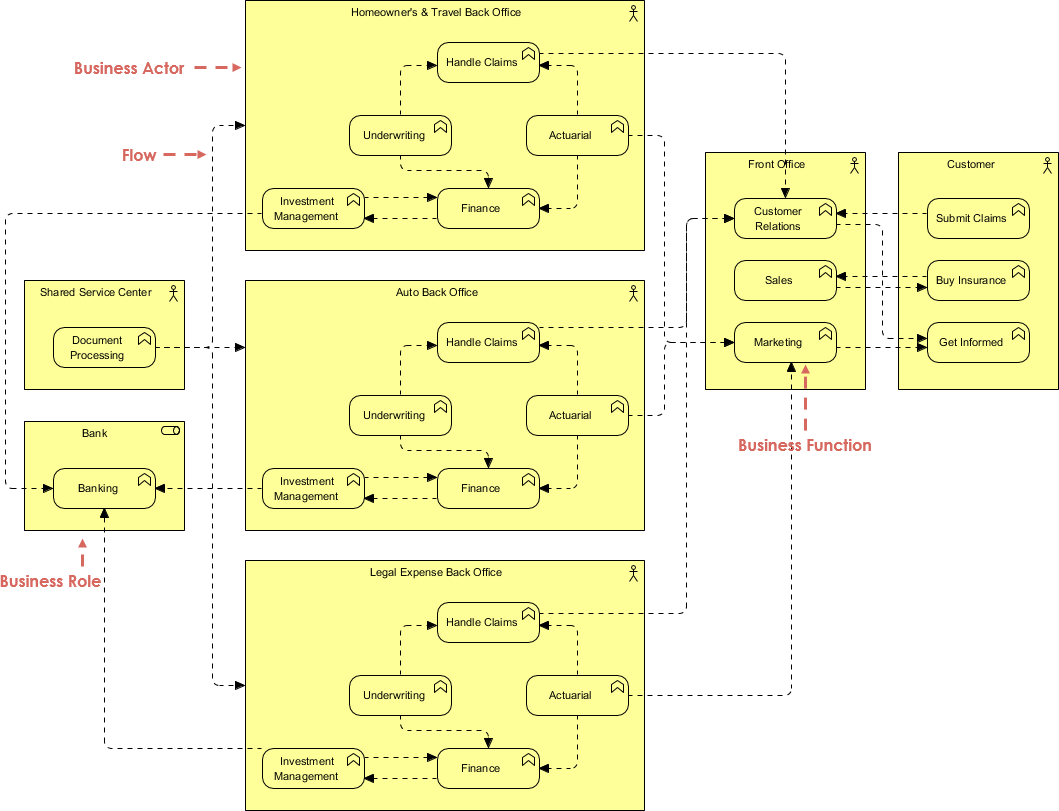
Objective: Transform abstract business capabilities into clearly defined business processes, functions, services and responsibilities.
Abstract Building Block: Digital Loan Management. In phase B, this capacity is broken down into business activities.
Example: process of subscribing to a real estate loan
Receipt of the customer's request
Verification of identity and eligibility
Collection of supporting documents
Solvency analysis
Validation or refusal of credit
Issuance of the credit offer
Business actors concerned:
Client
Bank advisor
Credit analyst
Risk manager
Possible deliverables of Phase B:
Business Capability Map
Business Process Diagram (BPMN)
Business Service Catalog
Organization/Actor Catalog
Gap Analysis between current and target business architecture
Takeaway: we move from a general “Credit Management” capability to a structured description of the way the bank should operate.
2. Phase C – Data Architecture
Objective: Transform business information needs into data entities, data models and logical data components.
Abstract Building Block: Customer Data Management. The underwriting process requires information about the client, their income and assets.
Example: breakdown of the Customer Data block
Possible business entities/data:
Customer
Loan Application
Income
Property
Bank Account
Repayment
Example logical data model:
Entity | Possible attributes |
Customer | Customer_ID, First_Name, Last_Name, Date_Of_Birth, Address |
Loan_Application | Application_ID, Customer_ID, Requested_Amount, Duration, Status |
We can also define:
The relationships between the entities
The data owners (Data Owners)
Data quality rules
Security and confidentiality rules
Data creation, modification and consultation flows
Concerning storage, we can identify a logical data storage component, then define the concrete solutions in the technological phases: PostgreSQL, Oracle, object storage, etc.
Possible deliverables:
Conceptual Data Diagram
Logical Data Diagram
Data Entity/Data Component Catalog
Data Entity/Business Function Matrix
Application/Data Matrix
3. Phase C – Application Architecture
Objective: transform abstract application capabilities into logical application components and define their interactions.
Abstract Building Block: Digital Loan Management. From the business process defined in phase B, we identify the applications and logical components necessary to support it.
Example: application components
Logical application component | Responsibility |
Digital Banking Portal | Client user interface |
Loan Management Component | Credit file management |
Customer Management | Customer Information Management |
Document Management | Supporting and Document Management |
Credit Scoring | Credit Risk Assessment |
Notification Service | Notifications to client |
Example of interaction
The client portal transmits a request to Loan Management.
Loan Management queries Customer Management.
Documents are transmitted to Document Management.
Loan Management requests Credit Scoring.
The decision is retrieved and communicated to the client.
We also define:
The responsibilities of each component
The interfaces and APIs
The interactions between the components
The data exchanges
The relationships between applications and business processes
Possible deliverables:
Application Portfolio Catalog
Interface Catalog
Application Communication Diagram
Application Interaction Matrix
Application Use-Case Diagram
Point of vigilance: the choice of a Serverless architecture, AWS Lambda, Azure Functions or Kubernetes mainly falls under Phase D – Technology Architecture. In Phase C, we define the logical application components and their interactions, independently of the technological choices.
4. Phase E – Opportunities & Solutions
Objective: transform the architectures defined in phases B, C and D into feasible solutions, projects and work packages (Work Packages).
At this stage, we have a target business architecture, a target data architecture, a target application architecture and a target technology architecture (Phase D). We must determine how to make this architecture a reality.
Example: correspondence between needs and solutions
Need / ABB | Envisioned solution / SBB |
Loan management | Microservice Loan Management |
Customer management | Microservice Customer |
Document management | Alfresco or existing document solution |
Communication between applications | Kafka |
API Management | Kong or Apigee |
Data storage | PostgreSQL and object storage |
Serverless execution | AWS Lambda |
These technologies are examples of possible solutions, and not choices imposed by TOGAF.
Example of Work Packages / projects
Project 1 – Digitalization of the customer journey: implementation of the banking portal and the subscription process.
Project 2 – Modernization of the credit system: development of Loan Management and Credit Scoring microservices.
Project 3 – Data modernization: implementation of data models and migration of customer data.
Project 4 – Cloud infrastructure: implementation of the Cloud platform, APIs and event messaging.
Phase E makes it possible in particular to:
Consolidate the gaps (Gap Analysis) from phases B to D
Identify the dependencies between the projects
Study the possible solutions: buy, develop or reuse (Buy, Build, Reuse)
Define the Work Packages
Identify transition architectures
Build a first Architecture Roadmap
5. Summary – How does an ABB become a concrete solution?
ADM phase | Example in the bank | Expected result |
A – Vision Architecture | Digital Loan Management | Abstract need/capacity |
B – Business Architecture | Subscription, verification, solvency, decision, offer | Business processes and actors |
C – Data Architecture | Customer, Loan Application, Income, Property, Repayment | Data entities and models |
C – Application Architecture | Loan Management, Customer Management, Credit Scoring | Application components and interactions |
D – Technology Architecture | Kubernetes, Kafka, API Gateway, PostgreSQL, Cloud | Technological architecture |
E – Opportunities & Solutions | SBB, projects, Work Packages, Transition Architectures | Solutions and initial roadmap |
Fundamental logic:
Phase A: identify the necessary capabilities.
Phases B, C and D: detail the target architecture in each area.
Phase E: transform this architecture into feasible solutions and projects.
6. Kubernetes, Kafka, API Gateway, PostgreSQL and Cloud: are they solutions?
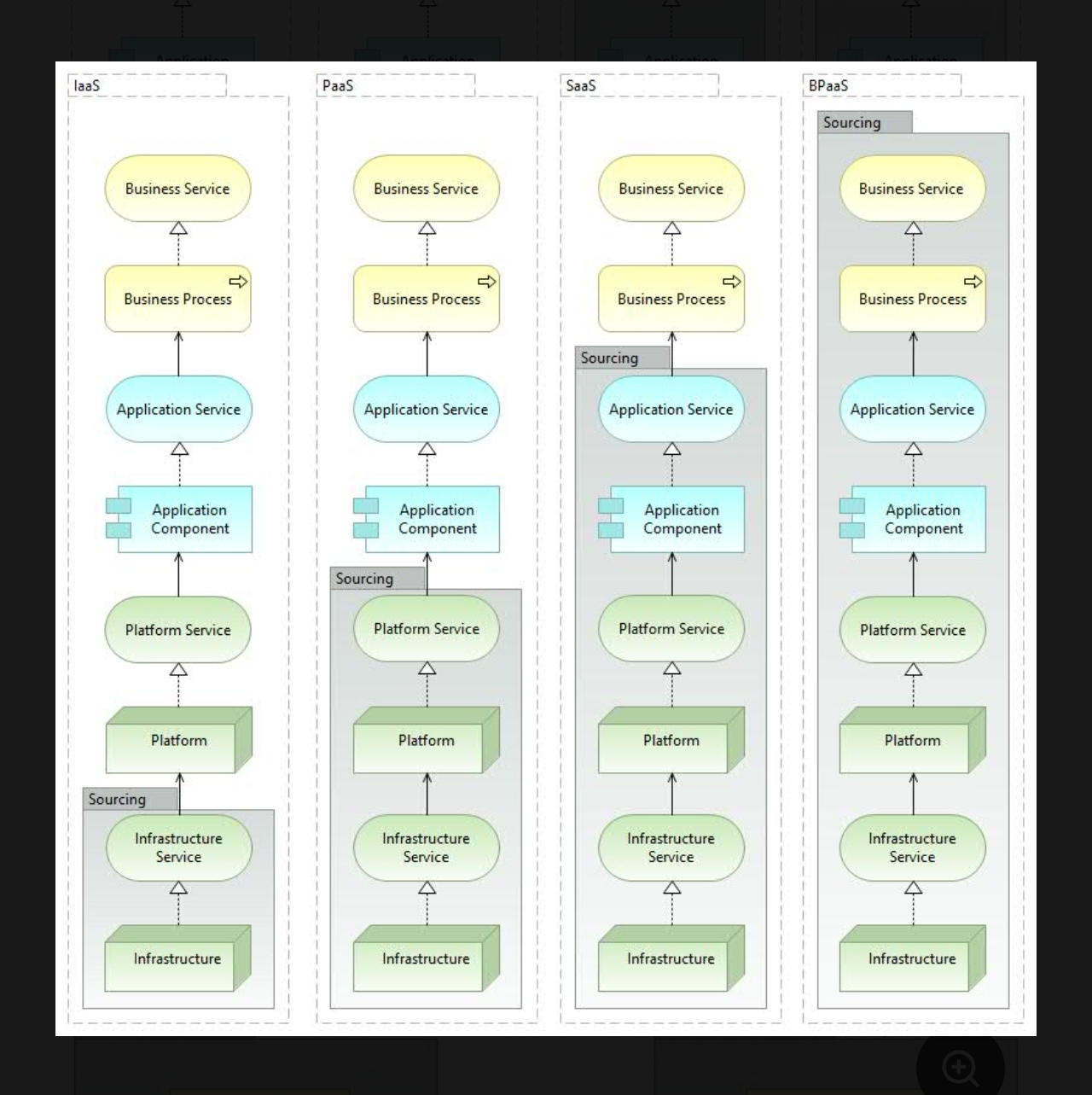
Yes, but we must distinguish the concepts. Kubernetes, Kafka, API Gateway, PostgreSQL and Cloud are technologies or platforms that can be used to implement Solution Building Blocks (SBB).
The three levels to distinguish
Architecture Building Block (ABB): describes an architectural capability or need, independent of technology.
Solution Building Block (SBB): Describes a concrete component that achieves this capability.
Product/Technology: Provides the technical implementation of the SBB.
Mapping Examples ABB → SBB → Technology
ABB (Abstract Need) | SBB (Concrete Solution) | Possible Technology |
Container Orchestration | Container Orchestration Platform | Kubernetes |
Event Messaging | Event Messaging Platform | Apache Kafka |
API Management | API Management Gateway | Kong, Apigee |
Relational Data Storage | Relational Database Service | PostgreSQL, Oracle |
Cloud Infrastructure | Cloud Infrastructure | AWS, Azure, GCP |
Object Storage | Object storage service | AWS S3, Azure Blob |
Identity Management | Identity management service | Keycloak, Okta |
Example: microservices architecture
In a bank building a microservices architecture, the mappings can be:
Architectural Need (ABB) | Solution (SBB) |
Expose Services to Consumers | API Gateway |
Orchestrate Microservices | Kubernetes |
Manage Asynchronous Communications | Kafka |
Persist relational data | PostgreSQL |
Host components | AWS / Azure / GCP |
Important subtlety for TOGAF
A technology product is not automatically a SBB. It is the architectural role that it plays that allows it to be considered as a solution component.
For example, Kubernetes alone is a technology product. A Kubernetes platform configured with deployment, monitoring, security, and container management mechanisms can constitute an SBB.
7. Things to remember
Concept | Key question | Example |
ABB | What do we need? / What do we need? | Event Messaging |
SBB | How do we provide it? / Which solution meets the need? | Event Streaming Platform |
Technology / Product | With what technology? | Apache Kafka |
Essential point: the ABB expresses the architectural need, the SBB describes the solution that meets this need, and the technology provides the means to implement it.
Conclusion
The progression of Building Blocks in ADM makes it possible to move from an abstract vision to a detailed architecture then to feasible solutions. Phase A identifies the necessary capabilities; Phases B, C and D detail the business, data, applications and technologies domains respectively; Phase E organizes the solutions and projects to realize the target architecture
Diagrams and illustrations